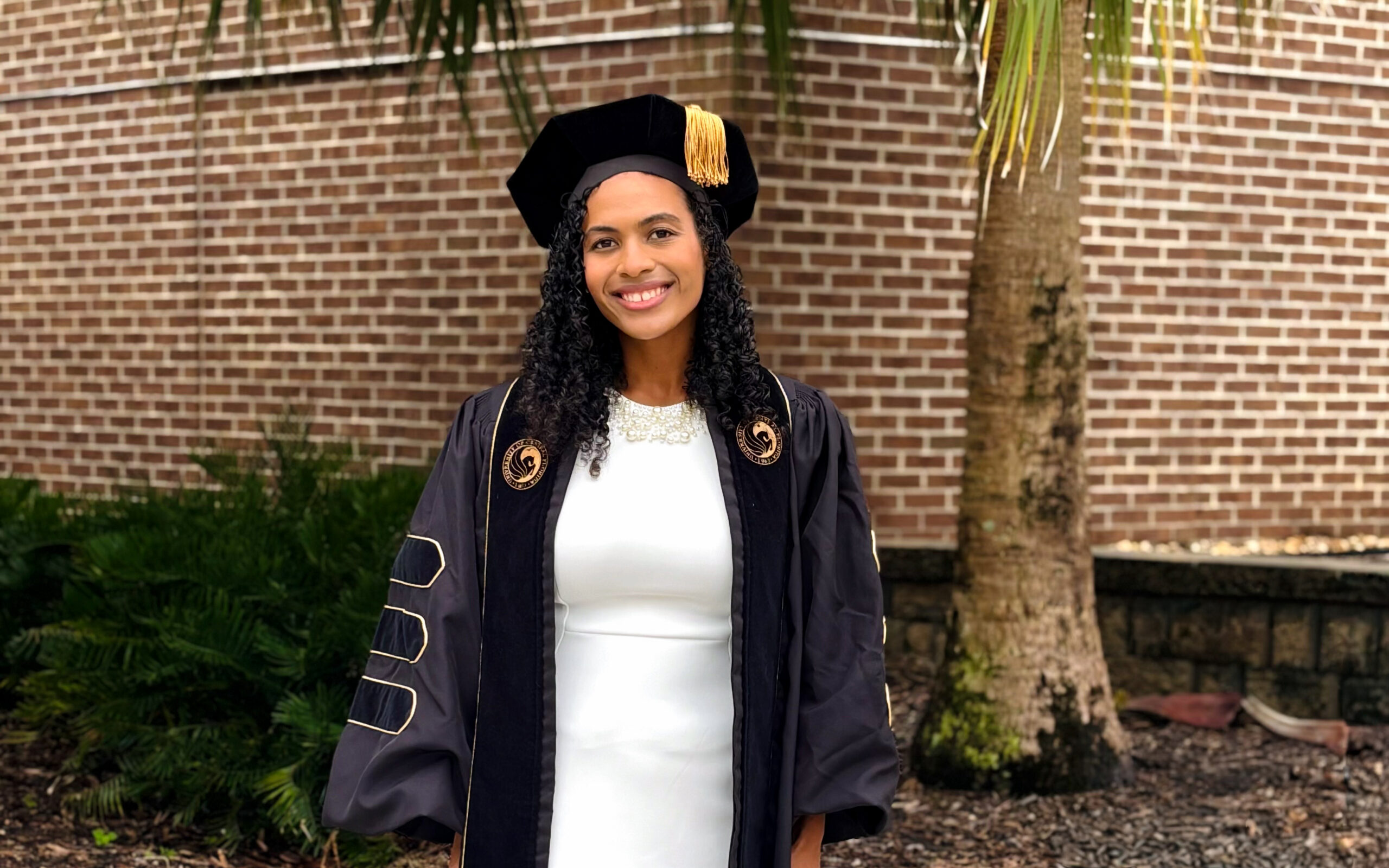
For her doctoral project, UCF nursing graduate Alicia Jennings used a simple, cost-effective program to help reduce burnout among new graduate nurses in the emergency department.
Working in an emergency department is stressful not knowing what patient situation will arrive next and some are life-threatening.
Due to the stressful environment more than 50% of emergency nurses report burnout, leading some to leave the profession. Further compounding the nursing shortage is new graduate nurses also report burnout and high stress with an estimated 33% leaving the profession within the first two years of practice.
Alicia Jennings, a nurse executive doctor of nursing practice (DNP) graduate, has seen these statistics play out in real life. She has spent most of her career in the emergency department in a variety of leadership roles, and currently is a nurse professional development practitioner at AdventHealth — one of UCF’s Pegasus Partners.
“The emergency department can be an overwhelming environment for new nurses, and I noticed that the stress they experience often leads to burnout,” says Jennings, who is among more than 200 nursing students graduating from UCF this week.
“I wanted to find a simple, cost-effective way to provide new graduate nurses with practical stress management tools to help them navigate this high-pressure setting,” she says.
For her doctoral scholarly project at UCF, Jennings deployed a five-hour structured stress management course to new graduate nurses in an emergency department at AdventHealth to reduce stress and burnout.
The results were promising. The project showed meaningful reduction in perceived stress. The program also supported nurse well-being and retention by enhancing coping skills and resilience, which “can be used throughout their careers to safeguard their well-being and mitigate the long-term consequences of occupational stress” says Jennings’ project chair Jayne Willis ’20DNP.
“Alicia’s project highlighted the powerful impact of an evidence-based stress-reduction program for newly graduated nurses entering the demanding environment of the emergency department,” says Willis, co-director of the nurse executive doctor of nursing practice program at UCF’s College of Nursing.
“The outcomes of her work extend beyond individual well-being; they offer a scalable model that can improve workforce stability, strengthen team culture, and contribute to long-term organizational success,” she adds.
“Small changes can have a significant impact. Even simple interventions can provide meaningful support and reduce stress for new nurses.”
Jennings was inspired to pursue a nursing career after her own experience in an emergency department. “The nurses treated me with dignity and respect, and I was inspired by how they collaborated with the team to provide exceptional care. I knew that I wanted to be part of that someday.”
She has followed that calling in nursing, and found a new calling in education where she can inspire and support the frontline to ultimately impact patient care.
Jennings plans to use her project as a foundation for future research and continue exploring stress management and burnout reduction strategies in the emergency department.
“My time at UCF has been an incredible journey,” she says. “The knowledge, mentorship and experiences I have gained have been transformative, and I am proud to carry this learning into my professional practice.”
Article by Julie Harper ’01
Has the UCF College of Nursing Positively Impacted You?
The mission of the College of Nursing at the University of Central Florida is to prepare nurse leaders and patient advocates through excellence in education, research and service.
Find out how to give back to your college, today!