Mindi Anderson, a global pioneer in healthcare simulation education, will lead academic programs, curriculum development and continued growth in future-focused learning environments as associate dean for academic affairs at the College of Nursing.
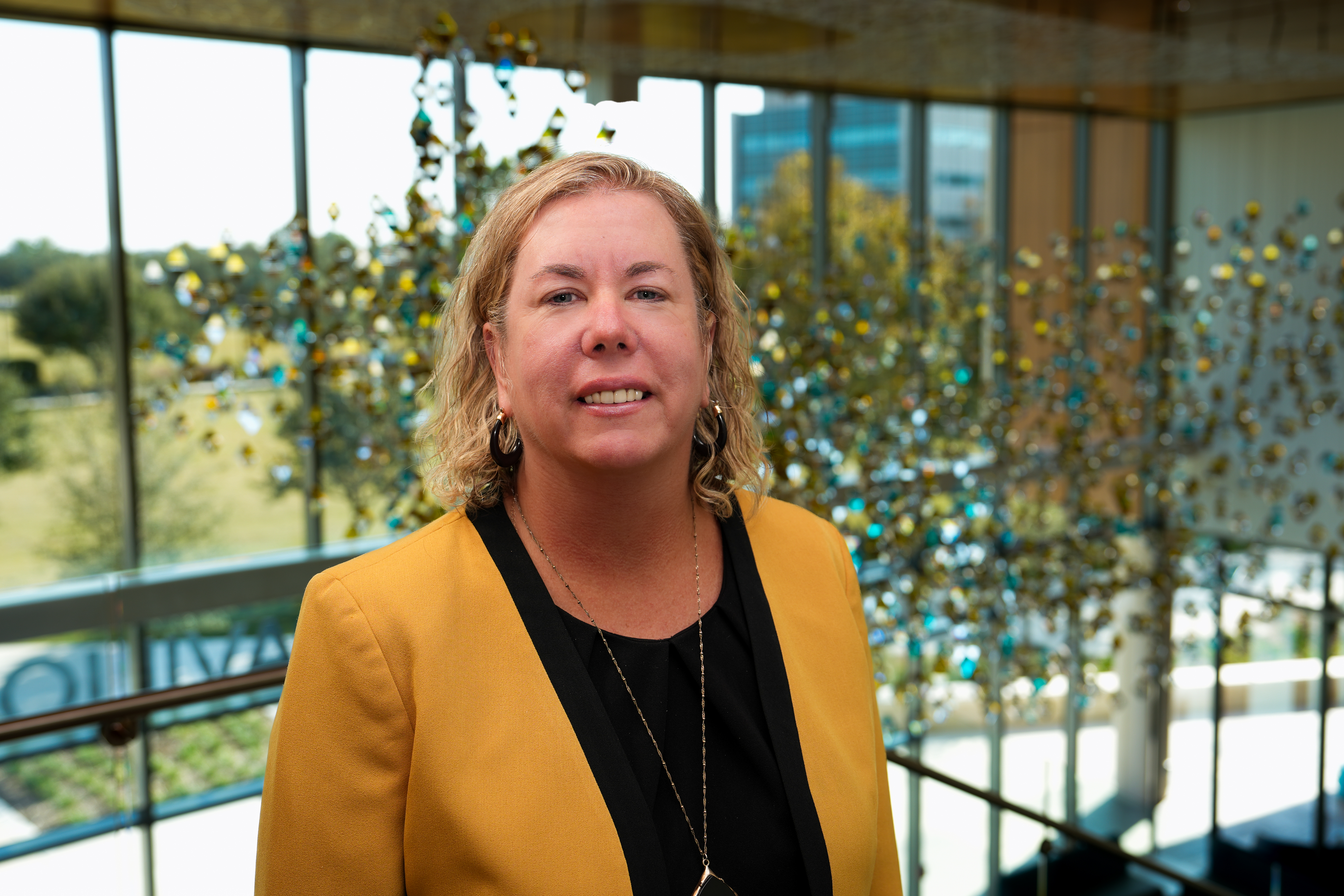
The University of Central Florida has appointed Mindi Anderson as the new associate dean for academic affairs at the College of Nursing. In this role, Anderson will lead academic programs, curriculum development and continued growth in future-focused learning environments at the college.
Since joining UCF in 2015, Anderson has served in several leadership roles at the college from founding program director of the healthcare simulation graduate program to most recently, associate dean for simulation and immersive learning and interim associate dean for academic affairs. In her roles, she has advanced UCF’s leadership, both nationally and internationally, in simulation, immersive learning and technology-enhanced nursing education.
“Dr. Anderson brings exceptional academic leadership, innovation, scholarship and a deep commitment to student success to this important role,” says Sharon J. Tucker, dean of the College of Nursing. “Just as importantly, she is a generous mentor, trusted colleague and collaborative leader whose work reflects the best of UCF.”
Anderson is an active researcher, innovator and mentor who holds dual global certifications in healthcare simulation education and operations, has multiple patents as a co-inventor, and has led best practices in healthcare simulation through peer-reviewed scholarship. For her significant contributions, Anderson has garnered numerous awards and commendations including fellow of the American Academy of Nursing — the profession’s most prestigious honor.
Learn more about the new associate dean below.
- You have been at UCF’s College of Nursing for more than a decade now, half of that in leadership roles related to healthcare simulation and immersive learning. What insights have you gained from your experiences and how will that shape the future at the college for curriculum, learning environments, and faculty and student success?
The biggest insights I have gained are: flexibility, adaptability, being on the cutting edge, and striving for best practices in both teaching and learning best practices through innovative development and research. These insights will help shape curriculum and future learning environments at the College of Nursing.
In addition, innovation is one of the college’s values as well as my own. I see us continuing to develop, research and implement new technologies and teaching and learning best practices to promote student success. Faculty success, especially those researching the scholarship of teaching and learning, will also be promoted.
- What are your goals in your new role for the College of Nursing?
UCF’s College of Nursing is recognized among the nation’s best nursing programs for its high-quality degree programs and nationally renowned faculty experts. My main goal is to build upon that and help the College of Nursing continue to offer high-quality nursing and interdisciplinary healthcare degree programs and certificates to educate the providers, educators, leaders and innovators our communities need.
Additionally, I hope to support new emerging healthcare programs that will continue to meet the evolving needs of both our community and the profession.
- You spent nearly 20 years in clinical practice in pediatrics. What inspired you to initially pursue a nursing career, and why did you choose that specialty?
I have always wanted to be a nurse and specifically, work with pediatric patients.
I was fortunate to have a great aunt who was a role model and one of the first authors to write about culture and childbearing. In fact, as a child, I was featured in one of her books.
There is nothing like working with a child and their family. I think it has always brought out my creative side because working with a child takes creativity.
- What led to your transition into simulation and academia?
My goal was always to work in academia after gaining experience at the bedside as I was inspired to educate future generations.
Simulation was a discovery for me. In one of my first roles in academia, I found a simulator in the closet, brought it to life and never stopped working with it. I love simulation because just like pediatric nursing, it requires creativity.
- You have been a pioneer in healthcare simulation education. What inspired you to be at the forefront of that emerging field?
When I first began work in healthcare simulation, it was very much an emerging field — and still is today, although it’s now growing at a much faster pace.
I have a genuine curiosity about best practices and finding the best way for students to learn. I love developing and testing new technologies and methods.
- What is the role of immersive learning and simulation in nursing education today, and how do you think it will evolve in the future?
Immersive learning is expanding in nursing and healthcare education — from holographic technologies to immersive spaces.
Simulation is also expanding. With competency-based education, simulation will continue to grow as a tool for teaching and learning and possibility assessment methodology. I feel that simulation will be further immersive in the future. For example, we are currently using immersive spaces and artificial-intelligence enhanced simulation to train current and future nurses. I see this only expanding and becoming more realistic.
- What career achievement are you most proud of and why?
I am most proud of the patents related to simulation and technologies on which I am a co-inventor. Applying for and obtaining patents is not an easy process, but so rewarding.
Additionally, I am proud of the four fellow honors I have received for my contributions to simulation, nursing, nursing education and interprofessional education. Being honored by peers, experts and the profession reinforces my scholarly work and inspires me to continue to innovate to make an impact.
- How would you describe your leadership style?
My leadership style centers on inspiring innovation while empowering others to achieve their full potential. I value collaboration and shared decision-making, recognizing that the strongest solutions emerge when diverse perspectives are brought together.
As associate dean, I seek to cultivate a culture of excellence by encouraging new ideas, supporting development, and recognizing the contributions of faculty, staff and students.
By fostering trust, accountability and a shared sense of purpose, I strive to advance meaningful changes that benefits individuals, the college and the profession.
- What inspires you each day in your work?
I love to come to work each day. I work with a great team of individuals who support each other and aspire to do their best. I also really love working with students and seeing them learn.
- There are many challenges in today’s healthcare environment. In your opinion, how will UCF and the College of Nursing continue to address these challenges?
UCF fuels solutions to challenges through student success, partnerships, research and innovation. I think, collectively, we will continue to work as a college and across disciplines throughout the university to solve many of the challenges facing healthcare.
Within the college, we will continue to educate in new innovative ways and topic areas to continue to evolve to prepare students to meet the healthcare demands of today and the future.
Article by Julie Harper ’01
Photos by Melanie Cedeño-Lopez ’23
Has the UCF College of Nursing Positively Impacted You?
The mission of the College of Nursing at the University of Central Florida is to prepare nurse leaders and patient advocates through excellence in education, research and service.
Find out how to give back to your college, today!